
basketball strength training program pdf
Basketball Strength Training Program: A Comprehensive Plan
This comprehensive program, developed with NSCA expertise, delivers a safe, efficient, and productive off-season plan for basketball players of all skill levels.
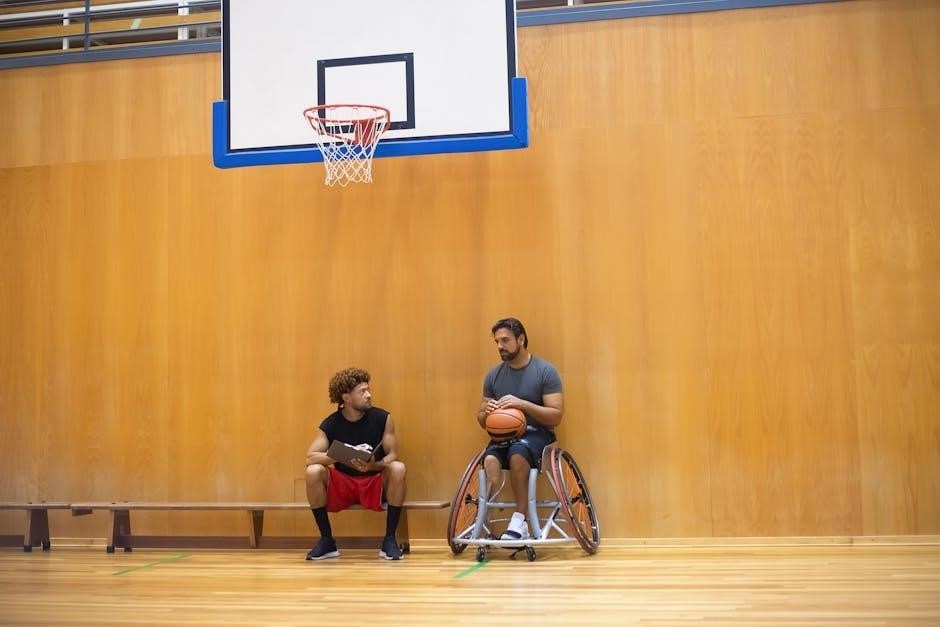
Basketball demands a unique blend of athletic attributes, extending far beyond shooting and speed. True dominance on the court requires players to cultivate exceptional muscle power, agility, reaction time, and the capacity to generate maximum force. A well-structured strength training program is no longer optional; it’s fundamental for unlocking an athlete’s full potential.
This program, informed by the National Strength and Conditioning Association (NSCA), provides a roadmap for designing resistance training regimens specifically tailored to basketball’s demands. It’s designed to enhance jumping ability, accelerate quickness, and improve the capacity for rapid directional changes. Whether you’re a coach working with a team or an individual player striving for improvement, this guide offers a day-by-day approach to building a stronger, more resilient, and more explosive athlete.
II. Importance of Strength Training for Basketball Players
Strength training is paramount for basketball players seeking a competitive edge. It directly translates to improved performance metrics – higher jumps, faster sprints, and more forceful movements. Beyond these physical gains, a robust strength program significantly reduces the risk of injury, a critical factor in maintaining consistent play throughout a demanding season.
Developing strength isn’t merely about lifting heavy weights; it’s about building a foundation of functional power. This means training movements that mimic the demands of the game, enhancing an athlete’s ability to react, accelerate, and decelerate efficiently. Ignoring strength training leaves players vulnerable to fatigue, limits their explosive potential, and ultimately hinders their overall contribution to the team. A dedicated program is an investment in longevity and peak performance.
III. Key Physical Attributes to Develop
Basketball demands a unique blend of physical capabilities, extending beyond simple endurance. Key attributes include maximizing strength for powerful post play and rebounding, and cultivating power – the ability to exert force rapidly – for explosive drives and jumps. Explosiveness, closely linked to power, is crucial for quick first steps and reactive movements on both offense and defense.
However, raw power is insufficient without agility & balance. Players must be able to change direction swiftly, maintain composure under pressure, and react instantaneously to opponents. These attributes aren’t isolated; they’re interconnected. A strong core supports agility, while explosive leg power enhances balance. A well-rounded program addresses all these components, creating a truly versatile and resilient athlete prepared for the multifaceted challenges of basketball.
A. Strength
Foundational strength is paramount for basketball performance, serving as the bedrock for all other athletic qualities. It directly impacts jumping ability, sprinting speed, and the capacity to absorb contact. Developing strength isn’t merely about lifting heavy weights; it’s about building a robust musculoskeletal system capable of withstanding the rigors of the game.
Focus should be placed on the “Big 6” movements: squats, hinge movements, horizontal press, horizontal pull, vertical press, and vertical pull. These exercises target major muscle groups, fostering overall strength gains. Strength training enhances muscle power, balance, and reaction speed, ultimately maximizing force potential on the court. Prioritizing proper form and progressive overload is crucial for safe and effective strength development.
B. Power
Power, the ability to exert maximal force rapidly, is a defining characteristic of elite basketball players; It’s not simply strength; it’s strength applied with speed. This translates directly to explosive movements like jumping, sprinting, and quick changes of direction – all vital components of the game. Developing power requires a focused approach beyond foundational strength work.
Exercises like push presses and Olympic lifts (when properly coached) are excellent for power development. Incorporating plyometrics – jump training – is also essential. Power training builds upon a base of strength, converting that strength into explosive athleticism. Remember, technique is paramount to prevent injury and maximize effectiveness. Prioritize quality over quantity when performing power exercises.
C. Explosiveness
Explosiveness, closely linked to power, represents the rate at which an athlete can generate force. In basketball, this manifests as the first-step quickness, the vertical leap for rebounds and shots, and the ability to drive past defenders. While strength provides the potential for force, explosiveness is about how quickly that force is unleashed.
Training for explosiveness often involves exercises that emphasize the stretch-shortening cycle – rapidly transitioning from an eccentric (lengthening) to a concentric (shortening) muscle action. Plyometrics, such as box jumps and depth jumps, are crucial. Additionally, incorporating weighted jumps and medicine ball throws can enhance explosive power. Focus on minimizing ground contact time and maximizing effort during each repetition to truly develop this critical attribute.
D. Agility & Balance
Agility and balance are paramount for basketball success, enabling quick changes of direction, maintaining control amidst contact, and executing complex movements on the court. These aren’t simply innate qualities; they are skills that can be significantly improved through targeted training.
Balance training should incorporate both static and dynamic exercises, challenging the athlete’s ability to maintain stability on various surfaces. Agility drills, like cone drills and shuttle runs, focus on rapid acceleration, deceleration, and re-direction. Integrating reactive agility drills, where movement is based on a visual cue, further enhances court awareness and responsiveness. Strengthening the core and proprioceptive muscles (those sensing body position) is fundamental for both agility and balance development.
IV. Program Overview: Phases & Duration
A well-structured basketball strength training program progresses through distinct phases, each with specific goals to optimize performance and minimize injury risk. The program is typically divided into three main phases: Off-Season, Pre-Season, and In-Season Maintenance.
The Off-Season Phase (8-12 weeks) focuses on building a foundational level of strength and addressing any muscle imbalances. The Pre-Season Phase (4-6 weeks) transitions towards power development and sport-specific movements, increasing intensity and mimicking game demands. An In-Season Maintenance Phase (optional) aims to preserve strength gains while managing fatigue, utilizing lighter loads and focusing on recovery. Careful periodization, adjusting volume and intensity over time, is crucial for maximizing results and preventing plateaus.
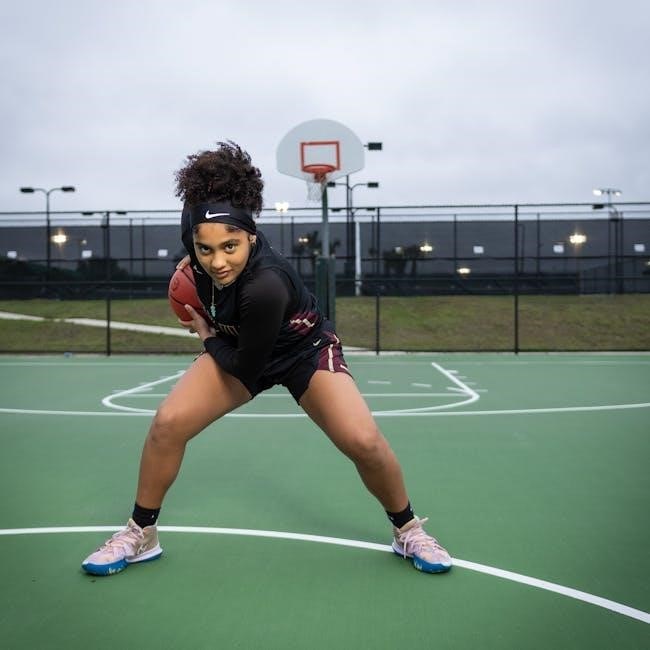
A. Off-Season Phase (8-12 weeks)

The Off-Season phase, lasting 8-12 weeks, is dedicated to establishing a robust strength base crucial for subsequent power and agility development. This phase prioritizes higher volume, moderate intensity training, focusing on foundational movements like squats, deadlifts, and presses. The goal is to increase overall muscle mass and strength, correcting any existing imbalances.
Expect 3-4 lifting sessions per week, emphasizing proper form and technique. Progressive overload – gradually increasing weight, reps, or sets – is key. This phase allows athletes to build work capacity and prepare their bodies for the more demanding pre-season phase. Recovery is paramount; adequate sleep and nutrition are essential for optimal adaptation and injury prevention.
B. Pre-Season Phase (4-6 weeks)
The Pre-Season phase, spanning 4-6 weeks, transitions the focus from pure strength to power and explosiveness, mirroring the demands of basketball. Training volume decreases, while intensity increases, incorporating movements like push presses and Olympic lifts to develop rate of force development. This phase bridges the gap between the strength gains of the off-season and the speed and agility required on the court.
Expect 3 lifting sessions per week, with an emphasis on explosive movements. Plyometrics – jump training – are introduced to enhance reactive strength. Maintaining strength levels while prioritizing power is crucial. Proper warm-up and cool-down protocols become even more important to prepare the body for high-intensity work and minimize injury risk.
C. In-Season Maintenance (Optional)
The In-Season Maintenance phase is optional, designed to preserve strength gains without compromising basketball performance or increasing fatigue. This phase prioritizes maintaining existing strength and power levels rather than seeking further improvements. Training frequency is reduced to 1-2 sessions per week, focusing on compound movements with moderate intensity.
The goal is to counteract the detraining effects of a demanding game schedule. Sessions should be short and focused, avoiding excessive volume. Prioritize recovery and listen to your body; adjust the program based on game demands and individual needs. This phase isn’t about building new muscle, but about preventing strength loss and staying resilient throughout the season.
V. Foundational Exercises: The “Big 6”
Building a solid strength base requires mastering six fundamental movement patterns, often referred to as the “Big 6.” These exercises form the core of any effective basketball strength program, enhancing overall athleticism and reducing injury risk. They include Squats (Back & Front), Hinge Movements (Deadlifts & Romanian Deadlifts), Horizontal Press (Bench Press & Push-ups), Horizontal Pull (Rows & Pull-ups), Vertical Press (Overhead & Shoulder Press), and Vertical Pull (Pull-ups & Lat Pulldowns).
These movements address all major muscle groups and improve functional strength. Proper form is paramount; prioritize technique over weight. These exercises build general strength, preparing the body for more specialized basketball-specific training. Consistent execution of these foundational lifts will yield significant improvements in on-court performance.
A. Squats (Back Squats, Front Squats)
Squats are arguably the most important exercise in a basketball player’s strength program, building lower body power and overall strength. Both Back Squats and Front Squats offer unique benefits. Back Squats allow for heavier loads, developing maximal strength in the glutes, quads, and hamstrings. Front Squats emphasize quad development and core stability, crucial for maintaining posture during drives and rebounds.
Focus on maintaining a neutral spine and controlled descent. Proper depth – thighs parallel to the ground – is essential for maximizing muscle activation. Incorporate variations like goblet squats for beginners. Squats directly translate to improved jumping ability, explosive first steps, and enhanced athleticism on the court.
B. Hinge Movements (Deadlifts, Romanian Deadlifts)
Hinge movements, like Deadlifts and Romanian Deadlifts (RDLs), are vital for developing posterior chain strength – hamstrings, glutes, and lower back. These muscles are critical for explosive movements, deceleration, and injury prevention in basketball. Deadlifts build overall strength and power, while RDLs emphasize hamstring flexibility and eccentric control.
Maintaining a flat back throughout the movement is paramount to avoid injury. Focus on initiating the movement with the hips, not the back. Proper form is crucial; start with lighter weights and master the technique before increasing the load. Strong hinge mechanics translate to improved sprinting speed, jumping height, and the ability to absorb impact forces.
C. Horizontal Press (Bench Press, Push-ups)
Horizontal pressing exercises, encompassing both Bench Press and Push-ups, are foundational for upper body strength and power development essential for basketball. The Bench Press allows for heavier loading, building maximal strength in the chest, shoulders, and triceps – crucial for battling for position and delivering powerful passes. Push-ups, a bodyweight exercise, enhance muscular endurance and stability.
Focus on controlled movements, maintaining proper form throughout each repetition. For Bench Press, ensure a slight arch in the back and controlled descent. Push-ups should be performed with a straight line from head to heels. These exercises contribute to improved shooting range and the ability to withstand contact during gameplay.
D. Horizontal Pull (Rows, Pull-ups)
Horizontal pulling movements, like Rows and Pull-ups, are vital for balancing the pushing exercises and developing a strong, resilient back. A strong back is paramount for maintaining posture, preventing injuries, and generating power in various basketball actions, including rebounding and defensive maneuvers. Rows, utilizing dumbbells or a barbell, build back thickness and strength.

Pull-ups, a challenging bodyweight exercise, enhance upper body pulling strength and grip strength – essential for controlling opponents and securing rebounds. Proper form is crucial; focus on controlled movements and full range of motion. These exercises counteract the forward rounding often seen in basketball players, promoting shoulder health and overall athletic performance.
E. Vertical Press (Overhead Press, Shoulder Press)
Vertical pressing exercises, encompassing the Overhead Press and Shoulder Press, are fundamental for developing strong, stable shoulders – crucial for shooting accuracy and overall upper body power. These movements build strength in the deltoids and triceps, directly translating to improved shooting range and the ability to withstand contact while driving to the basket.
The Overhead Press, often performed with a barbell, demands significant core stability and shoulder mobility; The Shoulder Press, utilizing dumbbells, allows for a greater range of motion and can address muscle imbalances. Prioritize controlled movements and proper form to prevent injuries, focusing on a full, yet safe, range of motion. Strong shoulders contribute to a more powerful and efficient basketball game.
F. Vertical Pull (Pull-ups, Lat Pulldowns)
Vertical pulling exercises, like Pull-ups and Lat Pulldowns, are essential for building a strong back and improving posture – vital for rebounding, boxing out, and maintaining a strong defensive stance. These movements strengthen the latissimus dorsi, rhomboids, and biceps, contributing to enhanced upper body strength and overall athleticism.
Pull-ups, a challenging bodyweight exercise, demand significant strength and coordination. Lat Pulldowns offer a scalable alternative, allowing players to adjust the resistance to their current fitness level. Focus on controlled movements, squeezing the shoulder blades together during the pull. A strong back provides a stable base for powerful movements on the court, improving performance and reducing injury risk.
VI. Sample 6-Week Off-Season Program
This 6-week program is designed to build a foundation of strength and power during the off-season, preparing athletes for the demands of pre-season training and competition. It progresses through three phases: building a base (Weeks 1-2), increasing intensity (Weeks 3-4), and power development (Weeks 5-6). Each week incorporates the “Big 6” foundational exercises – Squats, Hinges, Horizontal Press, Horizontal Pull, Vertical Press, and Vertical Pull – with a focus on proper form and progressive overload.
Workouts should be performed 3-4 times per week, allowing for adequate recovery between sessions. Prioritize quality over quantity, ensuring each repetition is executed with control and precision. This program serves as a template and can be adjusted based on individual needs and experience levels. Remember to incorporate a thorough warm-up and cool-down with each workout.
A. Week 1-2: Building a Base
The initial phase focuses on establishing a solid foundation of strength and movement proficiency. This involves mastering proper form for the “Big 6” exercises – Squats, Hinges (like Deadlifts), Horizontal Press (Push-ups), Horizontal Pull (Rows), Vertical Press (Shoulder Press), and Vertical Pull (Pull-ups). Emphasis is placed on higher repetitions (10-12) with moderate weight, prioritizing technique over maximal load.
Sessions should include 2-3 sets of each exercise, with adequate rest between sets. Incorporate bodyweight variations where appropriate to reinforce correct movement patterns. Focus on core stability throughout each exercise. This phase aims to prepare the body for more intense training in subsequent weeks, minimizing the risk of injury and maximizing long-term gains.
B. Week 3-4: Increasing Intensity
Building upon the foundational base, Weeks 3 and 4 introduce a progressive overload to stimulate further strength gains. This is achieved by gradually increasing the weight lifted while maintaining proper form. Repetition ranges shift to 6-8 per set, demanding greater muscular effort. Continue focusing on the “Big 6” exercises, but consider incorporating variations like Front Squats or Romanian Deadlifts to challenge the muscles differently.
Introduce a slight decrease in rest time between sets to enhance metabolic stress. Monitor athletes closely for signs of fatigue and adjust the program accordingly. Maintaining core engagement remains crucial. This phase prepares the neuromuscular system for the power development phase, fostering both strength and stability.
C. Week 5-6: Power Development
Weeks 5 and 6 transition the focus from maximal strength to power – the ability to exert force rapidly. This involves incorporating explosive movements like Push Presses and incorporating Olympic lifts, if appropriate for the athlete’s skill level. Reduce the weight lifted to 30-50% of your 1RM, emphasizing speed and acceleration during each repetition. Repetition ranges decrease to 3-5 per set, with longer rest periods (2-3 minutes) to allow for full recovery between explosive efforts.
Plyometric exercises, such as box jumps and depth jumps, can be added cautiously to further enhance explosiveness. Prioritize proper technique and landing mechanics to minimize injury risk. This phase aims to translate the strength gained in previous weeks into functional power for the basketball court.

VII. Warm-up and Cool-down Protocols
A thorough warm-up is crucial before each strength training session, preparing muscles and joints for the demands of the workout. Dynamic warm-up examples include arm circles, leg swings, torso twists, and walking lunges, increasing blood flow and range of motion. Foam rolling targeting major muscle groups – quads, hamstrings, back – can also be incorporated.
Following the workout, a cool-down is equally important. Static stretching, holding each stretch for 20-30 seconds, improves flexibility and reduces muscle soreness. Continue foam rolling to aid recovery and address muscle tightness. Prioritizing these protocols minimizes injury risk and optimizes performance gains.
A. Dynamic Warm-up Examples

A dynamic warm-up prepares the body specifically for basketball movements, enhancing performance and reducing injury risk. Begin with light cardio, like jogging or jumping jacks, for five minutes. Incorporate arm circles – forward and backward – to improve shoulder mobility. Leg swings, both forward/backward and side-to-side, increase hip flexibility.
Torso twists and walking lunges with a twist activate core muscles and improve rotational power. High knees and butt kicks further elevate heart rate and prepare leg muscles. Include inchworms and lateral shuffles to mimic basketball-specific movements. A well-executed dynamic warm-up is essential before any strength training session.

B. Static Stretching & Foam Rolling

Post-workout recovery is crucial, and static stretching alongside foam rolling plays a vital role in muscle recovery and flexibility. Hold each static stretch for 30 seconds, focusing on major muscle groups used during training – hamstrings, quads, calves, hip flexors, and shoulders. Examples include hamstring stretches, quad stretches, and calf stretches.
Foam rolling helps release muscle tension and improve blood flow. Target areas like the quads, hamstrings, calves, glutes, and back. Spend 60-90 seconds on each muscle group, applying moderate pressure. Combining static stretching and foam rolling enhances flexibility, reduces soreness, and promotes long-term muscle health, aiding in consistent performance.
VIII. Injury Prevention Strategies
Proactive injury prevention is paramount for basketball players, demanding a holistic approach beyond just strength gains. Proper warm-up routines, incorporating dynamic stretching, prepare muscles for exertion, reducing strain. Consistent core strengthening exercises enhance stability and balance, minimizing the risk of ankle sprains and knee injuries.
Focus on strengthening stabilizer muscles around joints. Implement plyometric exercises gradually, ensuring proper technique to avoid impact-related injuries. Prioritize adequate rest and recovery between workouts to allow muscles to repair. Listen to your body; don’t push through pain. A well-rounded program, coupled with mindful training, significantly reduces injury risk.